Which profile do you choose for metal frames?
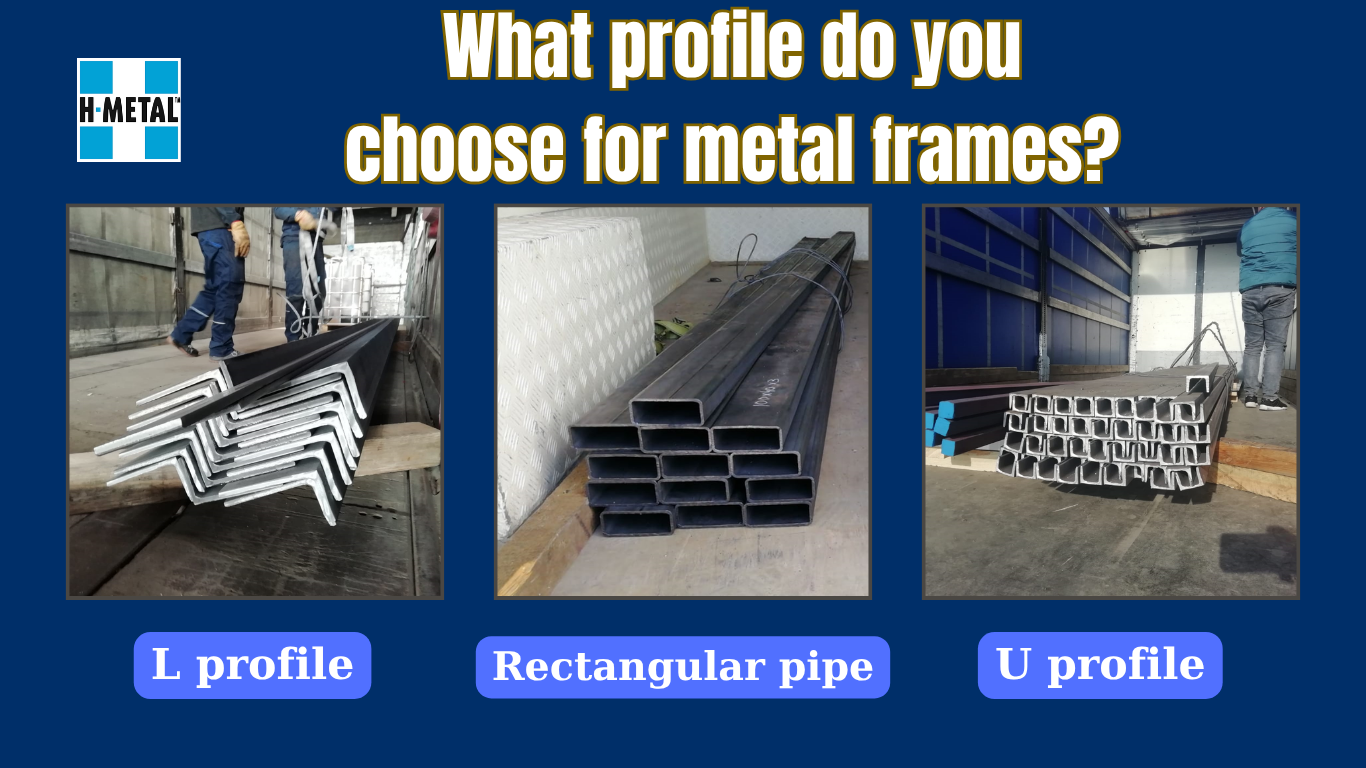
When building metal frames, choosing the right profile influences the stability and strength of the entire structure. In this article we discuss the difference between L profile vs. rectangular tube vs. U profile.
The shape and thickness of the metal determine how the frame withstands weight, vibrations or mechanical stresses that occur over time.
In many projects, L profile, rectangular tube or U profile are used, each having well-defined technical roles. These profiles are frequently used because they can be easily processed, weld well and can be adapted for numerous types of metal frames.
The choice is never made randomly, because each profile reacts differently to bending, torsion and the loads applied to the metal structure.
In addition, the length of the elements and the way of fastening influence the rigidity and final behavior of the structure.
A correctly dimensioned frame can function for many years without deformation or problems after installation on site.
Types of metal profiles used for metal frames
For making metal frames, several types of metal profiles are used, each having different structural characteristics.
The most common solutions are L profile, rectangular tube and U profile, because they fit many practical applications.
The shape of the section influences the rigidity of the profile and how it reacts to mechanical stresses.
These are available in various sizes and thicknesses, which allows adaptation to different projects. In practice, not only the shape of the profile is important, but also the thickness of the metal wall. A thicker-walled profile can provide higher rigidity and longer service life.
Therefore, the profile must be chosen considering the role of each element in the structure and the final stability of the metal frame.
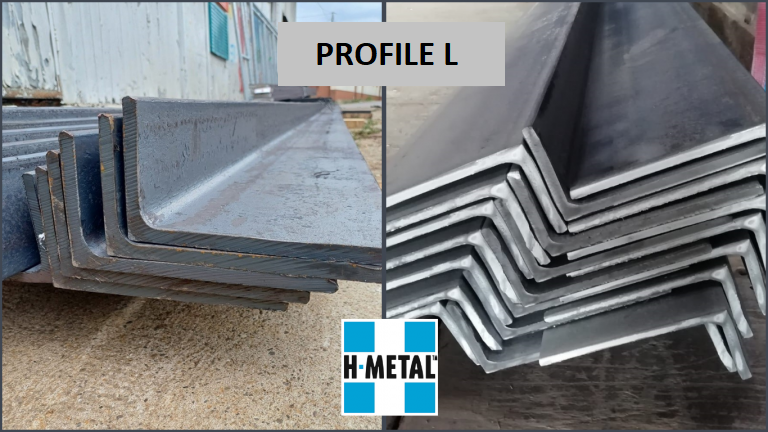
L Profile (Angle): Simplicity for metal frames
The L profile, also known as an angle, is one of the simplest profiles used in metal constructions. Its L-shaped section allows the quick creation of many light metal structures or secondary elements.
This type of profile is frequently used when the structure is not subjected to very high permanent loads.
The open shape allows easy cutting and quick welding, without major difficulties during installation. The low weight facilitates handling of the elements during positioning on site.
It also uses less material compared to metal profiles with closed sections.
However, the rigidity of the L profile is lower compared to other profiles used for metal frames. Its bending resistance becomes limited when element length is large or load increases.
Common applications include metal frames, light supports, fence structures or various types of metal frames for furniture.
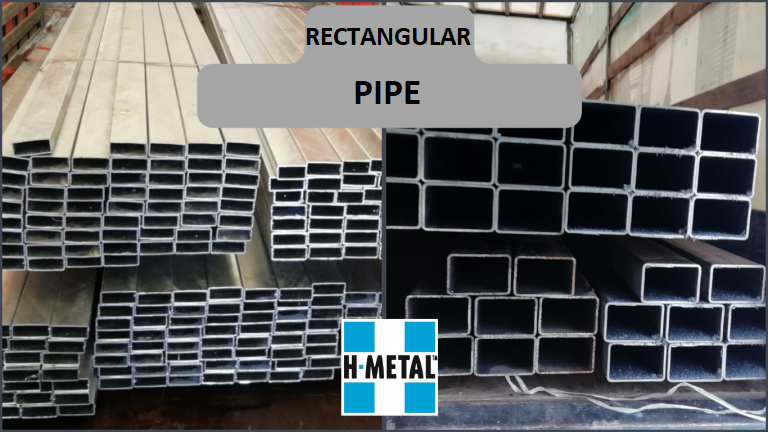
Rectangular tube: The safe choice for strength
The rectangular tube is a metal profile with a closed section, frequently used for building solid metal structures.
The rectangular shape distributes forces evenly and significantly increases the rigidity of the entire frame. For this reason, rectangular tube is used for columns or beams that carry heavy loads.
Bending resistance is better compared to open profiles used in similar metal constructions. Also, torsional resistance is superior to many other metal profiles used for structures.
The increased rigidity allows the use of longer elements without the risk of premature deformation.
Another advantage is the high stability of the structure when welds are properly executed. The disadvantage is the higher weight and slightly higher price due to greater steel consumption.

U Profile: Flexibility for various structures
The U profile has an open channel-shaped section and is frequently used as a structural element.
Its shape allows easy fastening of other components that are part of the structure. It is often used as a support element for various metal parts.
The rigidity is good in a certain direction, depending on how the profile is oriented.
In some situations, it can function as a stiffening element for other profiles used in the frame.
Installation is done by welding or mechanical fastening, being a flexible solution for different types of metal structures.
However, the U profile is more sensitive to torsion compared to closed-section metal profiles. In some applications, additional supports are required to avoid deformation of long elements.
Comparison of metal profiles
To better understand the differences between these metal profiles, a simple comparison of their main characteristics can be useful.
The L profile is suitable for light structures where loads are not very high and an economical solution is needed.
The rectangular tube offers higher rigidity and is frequently used for load-bearing metal frames or elements that must support heavier weights.
The U profile is often used as a support or guiding element, especially in modular structures or metal frames where additional fastenings are required.
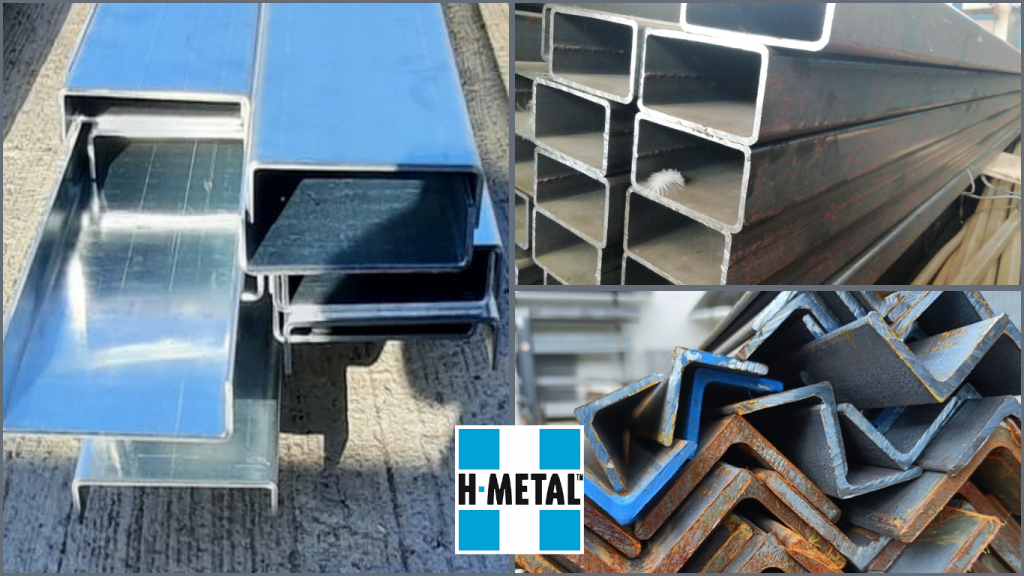
How to decide which material should be chosen
The choice of the appropriate metal profile depends on several technical factors related to the structure and its use.
The load supported by the frame is one of the most important parameters to analyze.
The length of the metal elements can influence rigidity and the risk of deformation of the chosen profile.
The fastening method, either welding or mechanical fastening, can change the behavior of the metal structure.
The choice is made depending on the supported load, element length, fastening method and usage environment.
Profile thickness directly influences the stability of the structure and must be correctly established for each project.
In many metal structures, a combination of several profile types is used, depending on the role of each element in the frame.
Conclusion: How to achieve a durable metal frame
L profile, rectangular tube and U profile are among the most used solutions for metal frames. Each has different characteristics that influence the behavior of the structure during use.
The choice depends on the supported load, project size and site conditions.
A correctly chosen and dimensioned metal frame can provide long-term stability and durability.
Protection of metal profiles and useful information
In many projects, corrosion protection is also important. Metal profiles can be galvanized or painted to better resist moisture and outdoor conditions. The choice of treatment depends on the environment where the metal frame will be used.
If you need details about metal profiles or product availability in stock, you can contact us at office@h-metal.ro.
You can also send a message on WhatsApp at 0749249007 for a quick response.
The H Metal team can provide information about L profile, rectangular tube, U profile and other metal products, as well as details that can help you choose the right materials for the metal frame or your project.
Information about dimensions, stock and delivery can help with correct material selection and easier project organization.

 English
  Română
  Français
  Magyar